🌿 The Pelvic Floor & Pilates: Why It Matters More Than You Think
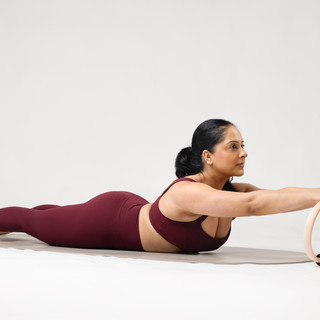
The pelvic floor is one of those parts of the body we rarely talk about… until something doesn’t feel quite right. But in Pilates? It’s quietly doing a lot of the heavy lifting.
Think of your pelvic floor as the supportive hammock at the base of your core. It works together with your deep abdominals, diaphragm, and back muscles to support posture, breathing, stability, bladder and bowel control, and even how confident and connected you feel in your body.
And here’s the key thing I want you to know The pelvic floor isn’t just about “squeezing and lifting.” It’s about strength, relaxation, coordination, and trust.
How Pilates Supports the Pelvic Floor
Pilates is uniquely powerful for pelvic floor health because it doesn’t isolate the body — it integrates it.
Here’s what that means in practice:
Breath-led movement
Using the breath to help the pelvic floor respond naturally — gently lifting on effort, softly releasing on rest.
Deep core connection
Building strength through the transversus abdominis (your deepest abdominal layer), which supports the pelvic floor from above.
Functional strength
Training the pelvic floor the way it works in real life — when you walk, lift, twist, laugh, cough, or move through daily life.
Release as well as strength
A tight pelvic floor can be just as challenging as a weak one. Balance matters.
Who Is Pilates For (Pelvic Floor Wise)?
Short answer: everyone. But it can be especially supportive if you:
Are pre or postnatal
Are in perimenopause or menopause
Experience pelvic heaviness, leaking, or discomfort
Feel disconnected from your core
Want to build strength without high-impact stress
Are returning to movement after time away
Pilates meets you where you are — and adapts with you.
A Gentle Reframe
This is important - Your pelvic floor doesn’t need constant fixing. It needs awareness, balance, and supportive movement.
We’re not here to clamp, clench, or control our bodies. We’re here to work with them — not against them.


Comments